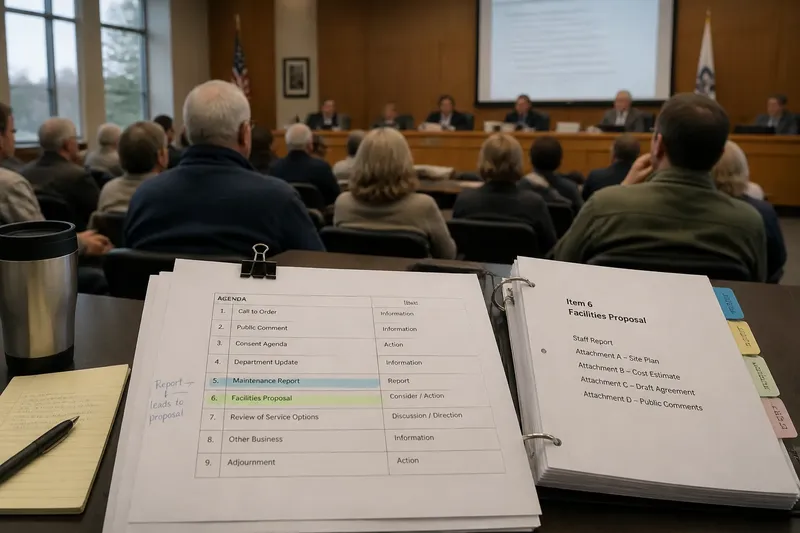
The Myth That Every Public Body Works the Same Way
Public bodies can look alike while holding different powers. Learn how to compare remit, structure, and decision routes so your question reaches the right office.

Two public bodies can serve the same town yet have authority over different decisions. Comparing public bodies by their remit, service area, and decision-making role helps you send a question to the right institution instead of relying on a familiar name.
The resemblance is easy to spot: both may publish notices, hold meetings, and answer residents. The differences sit underneath—in the rules that establish each body, the area it serves, and the work it is empowered to do. Think of them as keys on one ring: they may look similar, but each fits a different lock.
Shared public routines
Public institutions often publish information, receive requests, hold meetings, keep records, and explain decisions. They may also use similar labels, such as “board,” “authority,” “committee,” or “council,” even when those terms describe different arrangements.
Similar routines make public services easier to approach, but they do not mean two bodies have the same mandate. Both might invite public comment, for instance, while only one has authority over the issue under discussion. A familiar front desk is not proof that the offices behind it share responsibility.
Remit and decision powers
A remit is the set of matters a public body is responsible for addressing. Its authority may be set out in law, an establishing document, a formal delegation, or another governing arrangement. Those rules can specify what the body may decide, what it must deliver, and where its authority ends.
Institutions can take different roles on the same topic. One may deliver a service, another may set policy, and a third may review complaints or advise a decision-maker. Being involved in a subject does not automatically give a body power to make the change a resident is seeking.
Look for published responsibilities and decision-making powers rather than relying on an organization’s name or website subject headings. A service page may identify who administers a service; governance documents or an “about” page may explain who sets its rules and oversees its work.
How structures divide authority
Public bodies may be elected councils, boards, commissions, departments, regional partnerships, or other arrangements. Their structure helps show who sets priorities, makes formal decisions, carries out daily work, and reviews decisions.
A board might set policy while a department delivers services under delegated authority. Elsewhere, an elected body may decide an issue in public, with staff providing analysis and carrying out its direction. A regional organization may coordinate several local governments without taking over their separate responsibilities.
To trace a decision, identify the decision-maker, the office responsible for implementation, and any body that handles oversight or appeals. Several institutions may be involved, but their roles are not interchangeable.
Find the responsible institution
Begin with the action you want, not just the general subject. “Who sets the rule?” is different from “Who provides the service?” or “Who reviews this decision?” A single issue can involve several bodies, each responsible for one part.
Say a resident wants a street crossing changed. In this invented situation, the crossing is on a local street near a road managed by a regional agency. The resident first checks which organization manages the specific street segment, then asks that organization how crossing changes are considered. If the local body can make the change, it is the likely decision-maker; if it cannot, the resident asks which agency controls the relevant segment. The result is a clearer route, while the tradeoff is that a question about a connected road may need to go to a different institution.
If the destination remains unclear, ask a public contact point which body has authority over the particular decision and who can direct you onward. A concise question about responsibility is usually more useful than sending the same detailed complaint to every organization with a related name.
Compare public bodies
A useful comparison focuses on what each institution is responsible for, where its authority applies, and what kind of action it can take. Check the bodies’ published governance documents and service information side by side; similar names or meeting formats are not a substitute for those details.
- Area served: Check whether the body covers your town, district, region, or a particular facility. If the location is inside its stated area, continue checking its remit; if not, ask which body covers that location.
- Stated remit: Check whether its published responsibilities include the service or decision you have in mind. If they do, check its decision powers; if they do not, ask which institution owns that responsibility.
- Decision authority: Check whether the body can make the change or only advise, administer, or oversee another body’s decision. If it can decide, contact the relevant office; if it cannot, request the name of the decision-maker.
- Named contact: Check for a department, committee clerk, board office, or service team linked to the issue. If one is listed, address your question there; if none is listed, use the public contact point and ask for the responsible office.
- Review route: Check whether the institution names a separate appeal, complaint, or oversight body. If a review route applies, follow its published process; if none is identified, ask the institution who handles review before assuming it can reconsider the decision.
- Source of authority: Check for a law, establishing document, delegation, or governance rule that describes the body’s powers. If the source supports the role you need, use it to frame your question; if it is unclear, ask the institution to identify the governing source.
A contact center can be the right place to ask where a matter belongs even when it cannot decide the matter itself. Separating the contact route from the decision-making power avoids confusing an address with an authority.
Questions about public bodies?
Can one body overrule another?
Only when its authority allows it. A body may supervise, review, or hear an appeal from another, but a similar public role does not create an automatic power to overturn decisions.
Does a similar name mean the same remit?
No. Names may reflect broad subject areas or local naming conventions rather than identical responsibilities. Compare each body’s stated powers and service area instead.
Why can responsibilities overlap?
A service or policy may involve separate stages, such as setting standards, funding delivery, and handling individual cases. Each institution can be accountable for a different part of that work.
What if responsibility remains unclear?
Ask the relevant contact point to identify the decision-maker and the source of its authority. If the matter involves legal rights, a formal appeal, or a binding deadline, seek advice from a qualified professional or appropriate public adviser.
Different institutional arrangements
Public institutions reflect the responsibilities assigned to them, the territory or population they serve, and the rules that distribute authority. Similar needs can lead to different structures, while formal agreements can bring distinct bodies together on one task.
For a reliable comparison of public bodies, follow the responsibility rather than the resemblance: identify the issue, the decision you want, and the institution empowered to act. Then check whether another body handles delivery, oversight, or review; that final distinction can tell you where to take the next question.