How a Public Service Enquiry Moves From Request to Response
Understand how a public service enquiry moves from intake to follow-up, with clear details and a reference number to help you track its next step.
A public service enquiry can stall when its first recipient cannot answer it. Knowing how a public service enquiry moves from intake to the responsible team helps you give staff the details they need and follow the handoff without starting over.
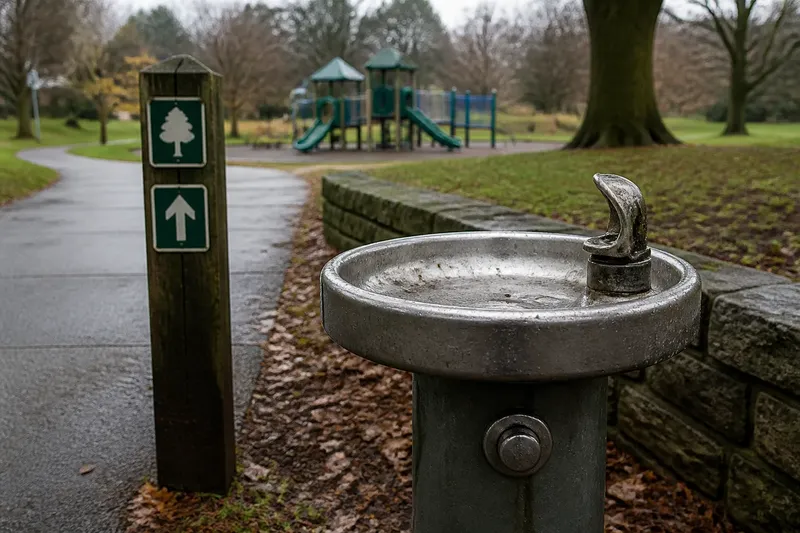
Imagine Maya notices that a public park’s drinking fountain is not working. She wants to know whether the problem has been reported, not to repair it herself. Her enquiry shows how to choose a contact route, understand an acknowledgement, and ask a useful follow-up question.
Choose a contact route
Maya starts on the city’s official website. A search for “park fountain” takes her to Parks and Recreation, whose page directs maintenance reports to a service-request portal. That distinction matters: a general enquiry asks for information, while a service request asks the organization to assess or act on a reported condition. The same subject may go to different teams depending on what the person is asking.
Before submitting, Maya checks that the portal belongs to the municipality and accepts reports about public park equipment. She names the park and a nearby path entrance, then describes what she observed: the fountain is not dispensing water. She avoids guessing at the cause. A specific, observable description is easier to route than a theory.
She provides a way for staff to reply. If the form accepts attachments, she may include a clear image showing the fountain and enough surrounding detail to identify it, without people’s faces or personal information. She saves a copy of her description and notes when she submitted it. If a confirmation screen or email provides a reference number, she keeps it for follow-up.
Receipt and routing
An acknowledgement is the first handoff. An automated email or confirmation page may show that the organization received the message, but it does not necessarily mean a staff member reviewed it, made a decision, or committed to a repair.
Next, a service desk or another intake point may route the message to Parks maintenance or a different responsible unit. Some organizations use categories and queues; others have staff assign each message. If the location is unclear, the description is vague, or the category is wrong, staff may ask for details or redirect the enquiry.
In Maya’s invented situation, the portal sends an acknowledgement with a reference number. A service-desk employee checks the park location and forwards the report to Parks maintenance. The observable result is a record showing which unit received the enquiry and a number Maya can cite later—not a promised repair date.
A reference number works like a luggage tag: it helps staff connect a follow-up to the original record. It does not show, by itself, that anyone has assessed the issue. The useful next question is whether the enquiry has reached the right team.
Assessment and response
The receiving team may review the record, request more detail, inspect the location, or decide another unit is responsible. The next action depends on the service and the information provided. A reply might name the responsible team, ask for a clearer location, explain that the issue is outside its remit, or say the report is under review.
A helpful response makes clear what the organization understood and what happens next. If Maya receives only “received,” she knows the message arrived but not whether maintenance has it. A more useful reply would identify the responsible unit or say the enquiry was redirected. Even without a firm timeline, staff can clarify the current status.
Organizations use different contact channels and procedures. If the correct route depends on a form’s instructions, the responsible agency, or local rules, follow that guidance or ask the agency which process applies.
Follow up with context
Suppose Maya receives no substantive update after the acknowledgement. She uses the city’s official contact route, includes the reference number, names the park and fountain, and asks whether the report reached maintenance. Those details help staff check the existing handoff instead of treating the message as an unrelated request.
If staff ask for a more exact location, Maya can answer that question. If they say another department handles the fountain, she can ask whether the report was forwarded or whether she needs to use another channel. That distinction tells her whether the original enquiry remains active or a new request is needed.
In this invented situation, staff say maintenance received the report but ask Maya to distinguish between two fountains. She replies that the fountain is beside the playground, using the path entrance as a landmark. The resulting record identifies a specific location for assessment; it does not assume her first description was enough.
When a reply addresses her question, Maya keeps it with her original submission. If it does not, she sends one focused follow-up: she names the unanswered point, includes the reference number, and asks for clarification. A calm, specific message helps the next staff member see what remains unresolved.
Where do enquiries get stuck?
These common questions can help you tell the difference between a message that has merely arrived and one that is moving through the service process.
What should I include in an enquiry?
State what you observed, where it happened, and what information or action you are seeking. Include relevant details and a reply method if the form requests one.
What does an acknowledgement mean?
It usually confirms that the organization received a message, not that a staff member resolved it or made a decision. Keep any reference number and look for a later update that identifies the next stage.
How should I follow up?
Use the organization’s official channel, include the reference number, and ask one clear question about receipt, routing, or status. Add only the details needed to clarify the existing enquiry.
What if another team is responsible?
Ask whether the enquiry was forwarded or whether you need to contact a different unit. If you submit again, mention the earlier reference number where possible so staff can connect the records.
Make the next step visible
Maya does not need to know the municipality’s internal organization chart. She needs an appropriate contact route, a specific description, an acknowledgement she can refer to, and a reply that makes the next step clear. The organization needs enough context to keep the enquiry recognizable as it moves from intake to the responsible team.
For a public service enquiry, a useful sign of progress is that the record has reached an appropriate person or unit and the response explains what is known and what remains unclear. Keep the reference number and the latest reply together; if the next update leaves you unsure, you can ask about the exact handoff rather than repeating the original report.